How to build a credible financial forecast

Iiro
Christensen
In many companies, financial forecasting is either too rough or, in the worst case, not done at all. At its best, however, it is one of the most essential tools for managing a business. Without an up-to-date financial forecast, issues related to cash flow and profitability are only noticed once they have already materialized.
In the work of a CFO, you see a wide range of financial forecasts. Their quality varies considerably, but effective forecasts often follow the same core principles. In this article, I will briefly go through the most important ones.
The forecast reflects your business model
One of the most common problems is that the forecast is built too much from an accounting perspective. Revenue appears as one line and costs as another, but the structure of the business remains unclear. In a good forecast, revenue should be structured in a way that reflects the company’s business model and how operations are organized.
This often means, for example:
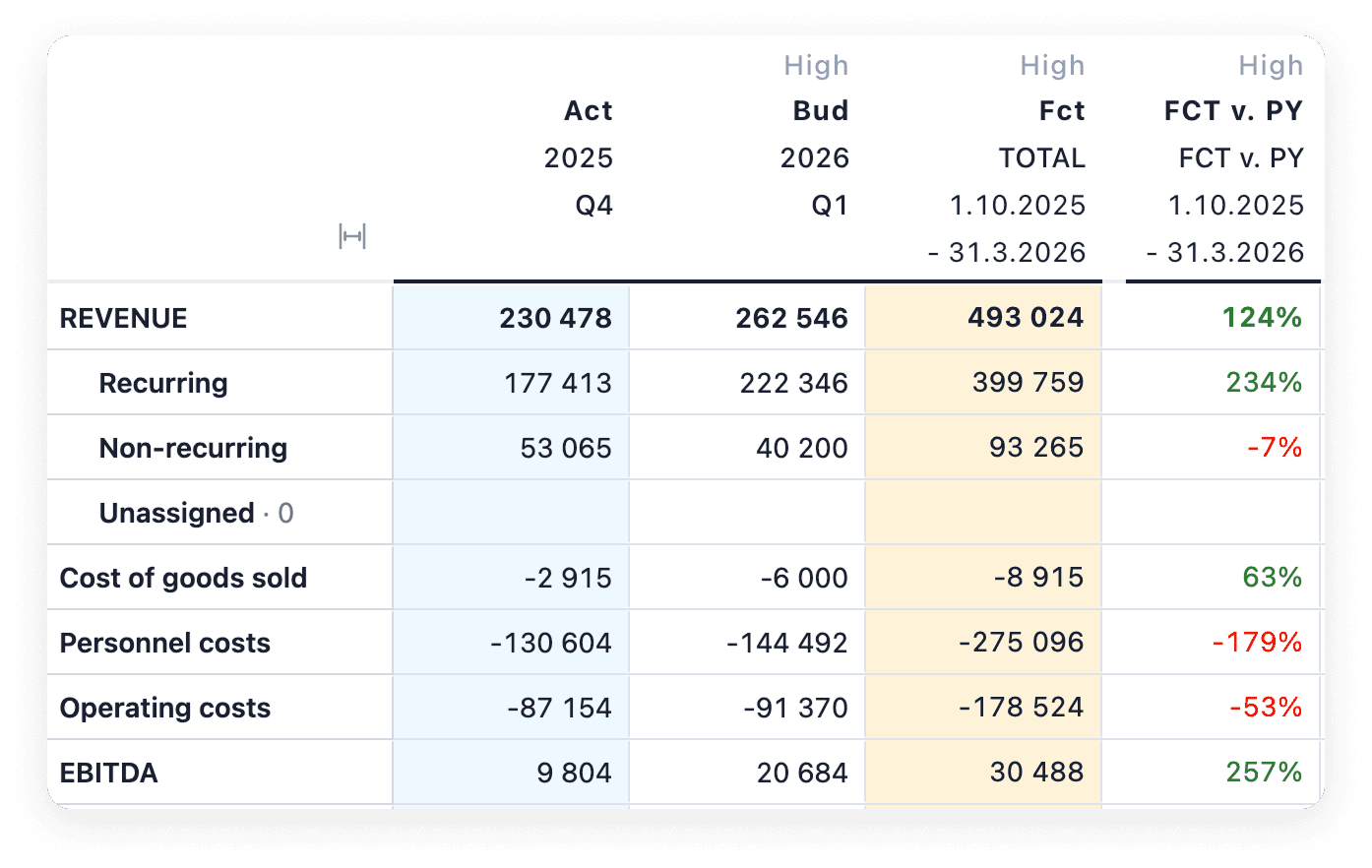
Recurring vs. one-time revenue
Product groups
Geographic regions
Business units
Product categories or services
In particular, breaking down recurring revenue into components—existing revenue, new sales, expansion sales to existing customers, and churn—makes the forecast much more informative. This allows for more precise evaluation of sales and where growth is coming from. At the same time, it supports the calculation of key metrics.
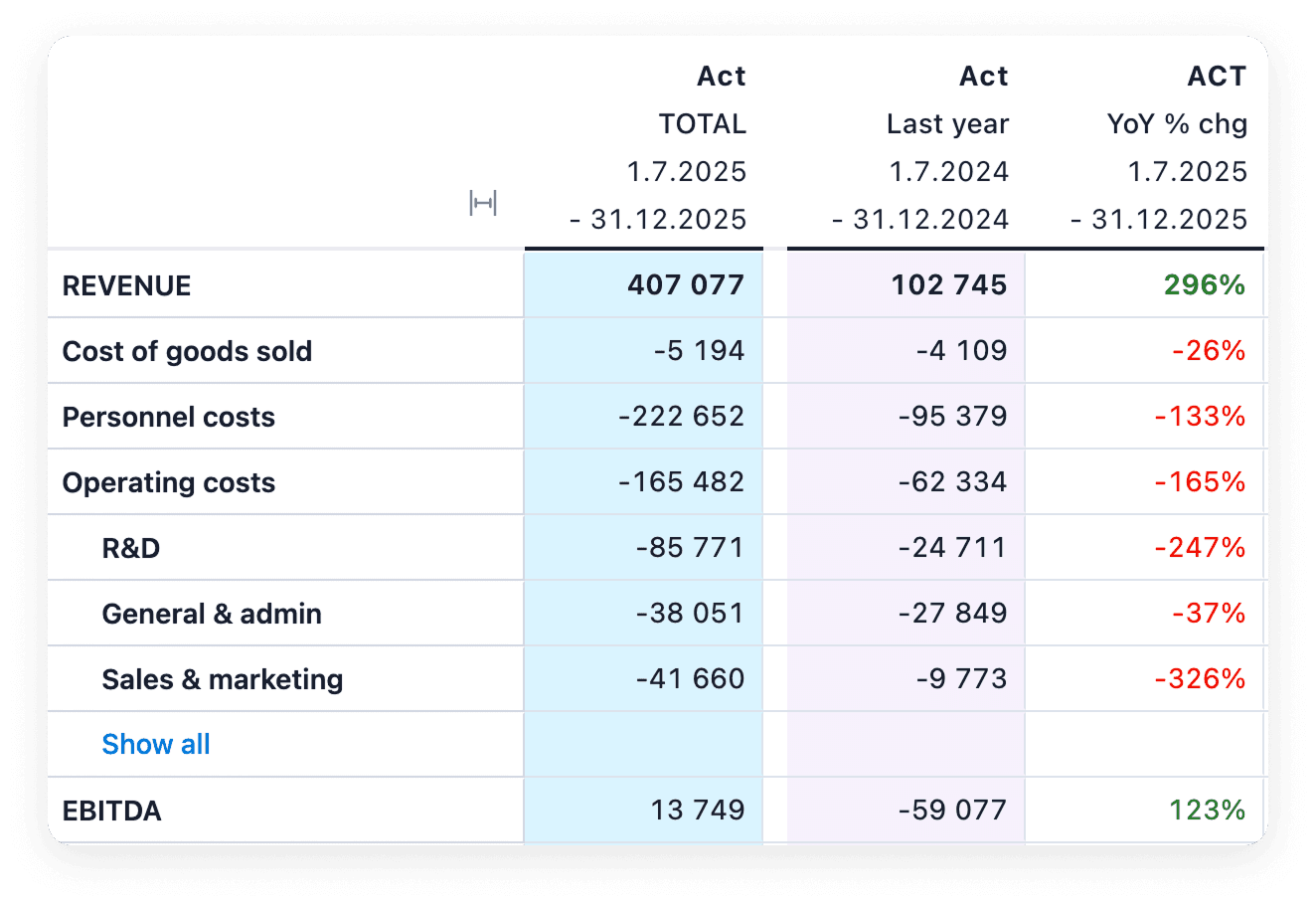
Costs are allocated by organizational functions
Just like with revenue, the cost structure should be modeled with sufficient detail. In many companies, the largest cost item is personnel, making its modeling a central part of the forecast.
Group costs according to key organizational functions. A good approach is to structure costs by function, for example:
Product development
Sales
Marketing
Administration
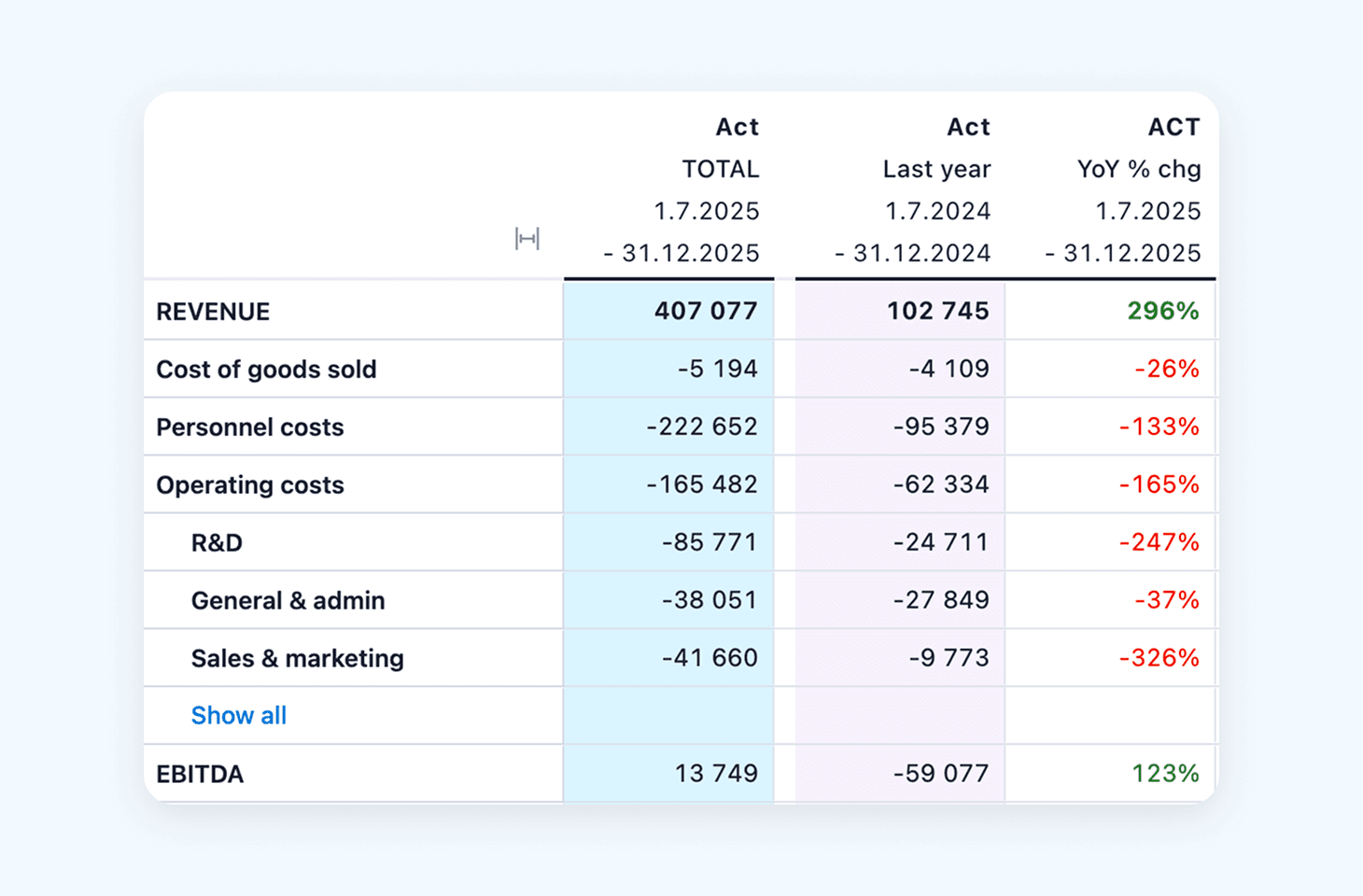
When costs are tied to teams and functions, the forecast also becomes a management tool. Function leaders receive monthly data on actual costs and can take responsibility for their own cost centers. The impact of new hires on costs and profitability also becomes clearer.
Cash-impacting special items are taken into account
Forecasts surprisingly often overlook items that directly affect cash and can have a significant impact. One typical example is the payment of holiday bonuses. In many companies, these occur during the summer holiday season, when revenue may simultaneously be lower than usual.
Interest and loans should also be included if the company has debt. Financing costs directly affect cash flow, and changes in interest rates can impact the company’s finances more than one might expect—especially if the company carries significant debt.
Sufficiently accurate is better than perfect
When it comes to financial forecasts, you often see two extremes. Either the model is too rough to provide useful insights, or it is so detailed that maintaining and interpreting it becomes too burdensome. In practice, the most effective solution lies somewhere in between.
As a rule of thumb, a good financial forecast provides a realistic view of margins and cash flow and helps identify potential risks early. It answers key questions such as: at what level of revenue the business becomes profitable, how hiring and other costs affect EBITDA, and how many months of runway the current cash position supports.
A financial forecast also serves as a useful checklist for monthly financial monitoring. During month-end closing, actual results can be compared to the forecast to quickly see where the business is on track and where deviations have occurred.
The most important thing is that the forecast is actually used. A slightly imperfect forecast is almost always more useful than a perfect model that no one has time to maintain.
A financial forecast is above all a management tool
At its best, a financial forecast is not just an Excel file updated once a year, but a central part of company management that is updated on a rolling monthly basis. When built around the logic of the business, it helps in decision-making related to hiring, investments, and growth pace.
If you’d like to see how Caleido helps companies with cash flow forecasting, budgeting, and financial reporting, you can book a 30-minute demo.
In the discussion, we will go through how to build a financial planning model that supports decision-making and makes financial management more transparent.